


Design Build vs. General Contractors vs. Turnkey: What’s the Difference?
August 20, 2026
7 min
Choosing a builder type is one of the earliest decisions when building a home. It is also one of the least understood.
General contractors, design-build firms, and turnkey builders all end up delivering a finished home. But the path to get there looks very different depending on which model you choose. The split of responsibility between you and your builder affects your timeline, your budget exposure, and how much coordination you are personally on the hook for throughout the build.
This guide covers how each model works, where each creates friction, and what to ask before you commit.
What Is a General Contractor?
A general contractor manages construction only. They take the plans you provide, usually from an architect or designer you have hired separately, and turn them into a finished home. You source the design team, you approve the drawings, and the contractor executes them.
This model works well if you already have architectural plans and simply need someone to build them. But it also means you are the one connecting the dots. If the architect and contractor disagree on a detail, you are often the one relaying messages between them. Homeowners who choose this route need to be comfortable managing multiple vendors and making decisions without a single point of contact.
What Is a Design-Build Firm?
A design-build firm combines design and construction under one contract. The same company that draws your plans also builds them, which means one team is accountable for the whole project instead of two separate ones.
This removes a major source of friction in the general contractor model: the handoff between designer and builder. Because the same firm handles both phases, changes made during design carry through to construction without a separate negotiation. Design-build still requires the homeowner to weigh in throughout, from early concepts through material selections. But there is only one team to coordinate with instead of several.
What Is a Turnkey Home Builder?
Turnkey is often used as a stand-in for design-build, but it describes a distinct third model. A turnkey builder manages everything from initial design through move-in, including architecture, permitting, construction, and the selection process, with the homeowner largely removed from day-to-day coordination.
Where design-build unifies two phases under one contract, turnkey extends that idea across the entire homebuilding journey. The homeowner still makes the decisions that shape the home, like floor plan, finishes, and budget. But they are not expected to manage subcontractors, track permitting timelines, or resolve scheduling conflicts. That coordination sits with the builder, whether you are working from a custom home design or a semi-custom plan.
Design-Build vs. General Contractor vs. Turnkey: How They Compare
The table below breaks down how each model handles the four factors that matter most to homeowners: coordination burden, accountability, timeline, and budget predictability.
If you already have finished plans and want a straightforward build, a general contractor may be all you need. If you want one team accountable for both design and construction, design-build removes the handoff between designer and builder.
And if you want just as much say over the design, but none of the work of managing subcontractors, permitting, and schedules, turnkey is built to shift that coordination to the builder without pulling you out of the decisions.
Pros and Cons of Each Approach
Each model trades flexibility, communication, and simplicity in different ways. None of them is universally better. The right choice depends on how much you already have in place and how much coordination you want to take on yourself.
When a General Contractor Makes Sense
A general contractor makes sense when you already have completed architectural plans, whether from a previous project or an architect you have hired, and simply need a builder to execute them. This model offers the most flexibility to choose your own design team and shop around for contractors. But it puts the burden of coordination on you. If the plans change mid-build, you are the one managing that conversation between designer and contractor.
When a Design-Build Firm Makes Sense
Design-build makes sense when you want a single team accountable for both the vision and the execution. It suits homeowners who are comfortable staying closely involved throughout the process, because every architectural and design decision ultimately rests with you. Layout, structure, materials, fixtures, and finishes are all yours to weigh in on, and there are a lot of them. For some homeowners this level of ownership and control is the appeal. For others, making decision after decision across the length of a build can start to feel less like creative control and more like a full-time job. It reduces the friction of managing separate contracts, but it does not lighten the weight of the decisions themselves.
When a Turnkey Builder Makes Sense
Turnkey makes sense when you want the least amount of friction from start to finish. It suits homeowners who want to make the big decisions, like floor plan, finishes, and budget, without managing the people and processes behind them.
Since one team owns the entire process, the benefits extend beyond just a lighter mental load for you. For one, timelines move faster, since there are no handoffs between separate contracts to stall the schedule. Costs are more efficient, since design and construction are priced together instead of negotiated twice. And the homes are designed for how people actually live, using refined plans you can adjust to fit your family.
This is often also the right fit for homeowners rebuilding after a wildfire, when there is little bandwidth left for coordinating separate vendors.
How Homebound's Turnkey Model Works
Homebound operates as a turnkey homebuilder. Instead of splitting design and construction across separate contracts, or leaving coordination to the homeowner, Homebound's team manages the process from design through move-in.
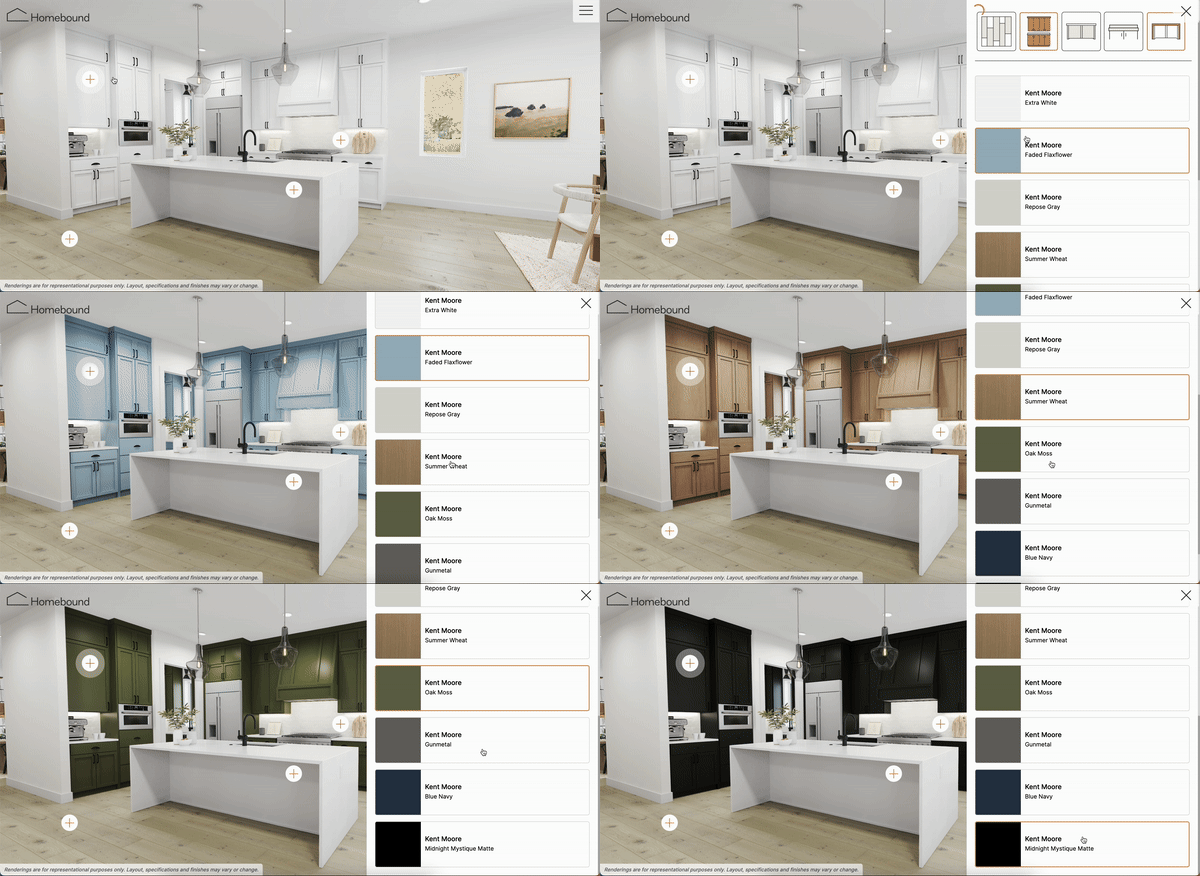
Pricing is transparent throughout. Homeowners can configure their home online using Homebound's Digital Design Studio, adjusting floor plans, finishes, and upgrades while watching pricing update in real time. That transparency extends into the pricing model itself. Understanding cost-plus versus fixed-price contracts is part of the same decision, since pricing model and delivery model shape the experience together.
A coordinated team of experts, including designers, architects, and construction managers, works under one roof. Homeowners are not left managing separate vendors or resolving conflicts between them. That is the core difference between turnkey and the other two models: the coordination burden shifts from the homeowner to the builder. It is also part of what makes building a new home a realistic alternative to buying one, since the process does not require managing a construction project on top of everyday life.
Ready to see what a turnkey build looks like for your project? Reach out to the Homebound team for a consultation.
Design Build vs. General Contractor vs. Turnkey FAQs
What is the difference between a design-build firm and a general contractor?
A general contractor handles construction only, working from plans the homeowner sources separately. A design-build firm combines design and construction under a single contract, so one team is responsible for both.
What does turnkey mean in homebuilding?
Turnkey means the builder manages the entire process, from initial design through move-in, including permitting, construction, and coordination between every specialist involved. The homeowner makes the key decisions but is not responsible for managing the day-to-day logistics.
Is design-build more expensive than hiring a general contractor?
Cost depends on the project and the firms involved rather than the model itself. A general contractor's overall cost includes design fees paid separately to an architect, while a design-build firm bundles design and construction into one contract. Comparing total project cost, not just the contractor's quote, gives a clearer picture.
How much involvement does a homeowner need with each model?
A general contractor requires the most involvement, since the homeowner coordinates between the design team and the builder. Design-build reduces that by unifying the team, though homeowners are still consulted regularly. Turnkey requires the least day-to-day involvement, since the builder manages coordination across the entire process.
Does Homebound operate as a design-build or turnkey builder?
Homebound operates as a turnkey builder. The team manages design, permitting, and construction under one roof, with transparent, technology-driven pricing throughout the process.
Building
Home Builders
