


How To Choose a Homebuilder
The Complete Guide To Choosing the Best Homebuilder To Meet Your Unique Needs
July 9, 2026
13 min
Building a home is a huge milestone for most people, and the builder you choose determines almost everything about how that experience goes. The quality of the finished home, budget management, how many surprises you encounter along the way, and whether you spend months managing crises all flow from that one choice.
Most people have never done this before. They start evaluating builders without knowing what good actually looks like. They tour model homes, collect a handful of bids, and try to make a high-stakes decision with very limited information. By the time they realize a builder isn't the right fit, they're already deep into a contract.
This article gives you a practical framework for finding the right builder, from first research to final contract. We'll cover how to shortlist candidates, what to evaluate and why it matters, common red flags, and the questions worth asking before you sign anything.
Know What You're Looking for Before You Start
Before you start evaluating individual builders, you need to understand that different types of builders operate in fundamentally different ways.
At a high level, the market breaks into four categories:
- Custom builders build your home entirely from scratch based on your specifications. You're involved in every decision, from the floor plan to the finish materials. This model gives you the most creative control, but it also requires the most time, the most decisions, and typically the highest budget.
- Semi-custom builders start from a set of existing floor plans that can be modified within defined parameters. You can make meaningful changes to layouts, finishes, and features, but you're working within a framework rather than starting from a blank page. This model offers a good balance of personalization and process efficiency, and tends to be more cost-predictable than full custom.
- Personalized builders, sometimes called design-build firms, operate somewhere between semi-custom and full custom. They bring architecture, design, and construction under one roof, which reduces the coordination burden on the homeowner and streamlines decision-making.
- Production builders construct homes from a fixed catalog of plans in master-planned communities. Customization options are limited, usually confined to pre-approved finishes and upgrades, but the process is the most streamlined and the pricing is the most straightforward. These builders are a strong fit for buyers who want a new home without the complexity of a custom process.
Understanding the pros and cons of different homebuilder types before you start shortlisting anyone will save you a lot of time.
Related note: If you're still securing land, it's also worth understanding what to look for in a vacant lot before your first builder conversation, since lot conditions directly affect what a builder can do and what it will cost.
How to Research and Shortlist Homebuilders
A strong shortlist doesn't come from a single source. The builders worth talking to are usually discovered through a combination of direct referrals, industry resources, online research, and old-fashioned site visits. Each source gives you a different type of signal.
Referrals From People Who Have Built Recently
Personal referrals from people who've completed a build in the last few years are the most valuable starting point. Recent experience matters a lot. A builder's performance can shift noticeably from one period to the next based on the subcontractors they're working with, their current workload, and whether key staff have changed. A glowing recommendation from five years ago tells you less than a lukewarm one from last year.
When you ask for referrals, push past the surface. You want to know how the builder handled problems, not just whether the home looks good. A beautiful finish doesn't tell you whether the builder communicated clearly, hit their timeline, or honored their commitments when something went wrong. Those are the questions that reveal whether working with someone is actually a good experience.
Local Builder Associations
Your local Homebuilders Association is a practical source of information that most people overlook. Member directories list licensed builders operating in your area, and many associations also publish complaint histories or disciplinary records.
Remember, membership alone isn't a quality guarantee, but it does signal that a builder has committed to professional standards and is operating within the formal industry structure. It's a reasonable filter when you're narrowing a large initial list.
Client Testimonials and Case Studies
When researching a builder, look beyond star ratings and seek detailed accounts of what the experience was actually like. Testimonials and case studies from real clients, especially ones that speak about the process and not just the finished home, are far more useful than any aggregated score. Homebound publishes client stories that go into that level of detail.
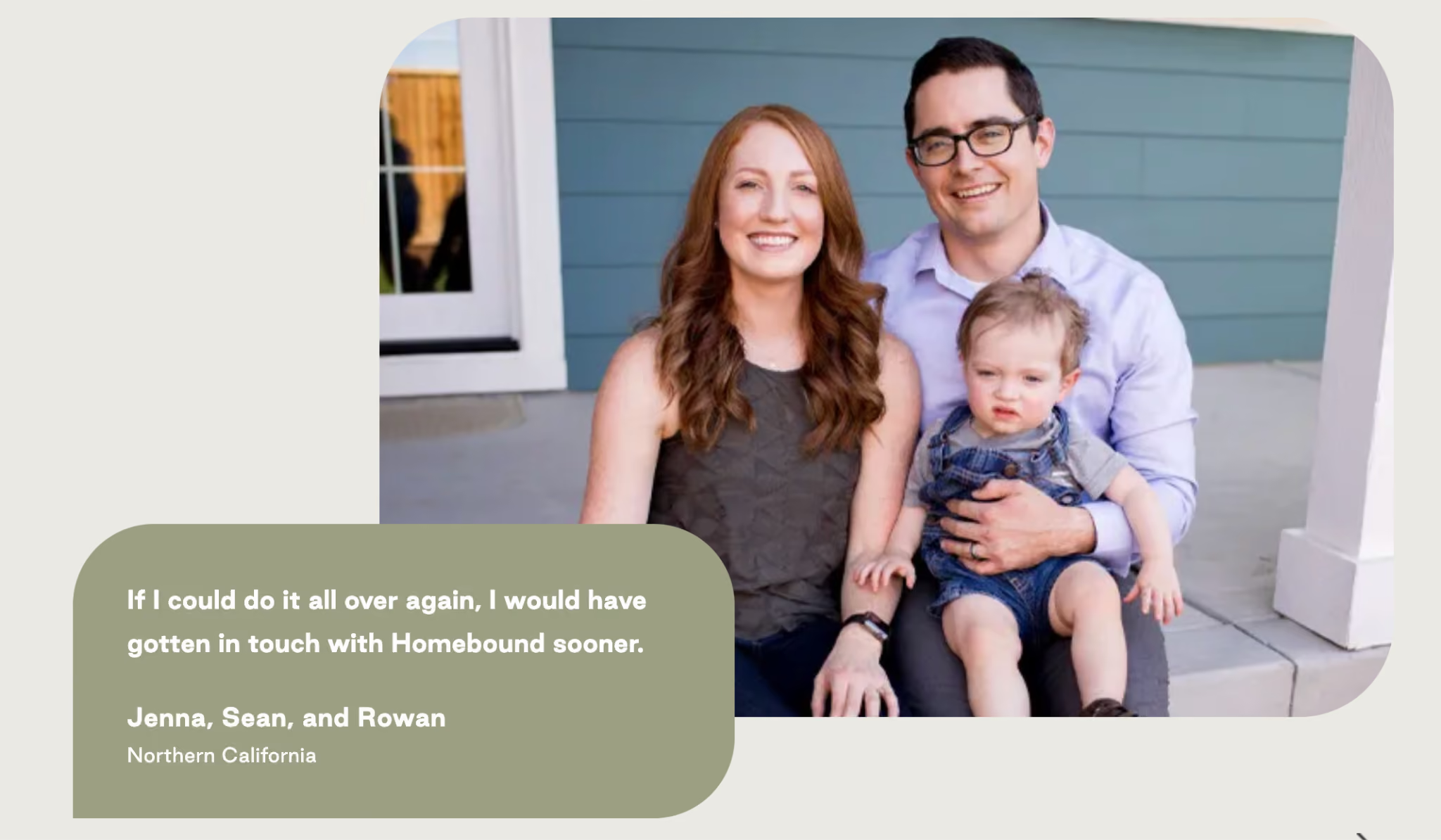
When evaluating testimonials for any builder you're considering, look for ones that speak specifically to communication, how problems were handled, and whether the final outcome matched what was promised. A testimonial that only says the home is beautiful doesn't tell you much. One that describes how the builder showed up when things got hard paints a more complete picture.
Visiting Completed Homes in Person
Visiting completed homes that people actually live in is the most underused and most revealing research step available to you. Model homes are marketing tools. They were designed to impress. The homes that real clients occupy after the cameras and staging are gone may tell a very different story about quality, craftsmanship, and what the builder's work actually looks like over time.

Ask the builders on your shortlist for a list of recently completed projects and whether any homeowners would be willing to let you walk through. Look closely at finish quality, how doors and windows operate, whether trim work and tile are executed with care, and whether the details you'd notice in a year are as clean as the details you'd notice in a brochure. A high level of scrutiny in the research phase will save you from a great deal of disappointment later.
What to Look for When Evaluating a Homebuilder
Once you've shortlisted some builders, you need a consistent framework for evaluating each against certain criteria. The factors below most directly predict whether your build will go well.
Experience and Track Record
Years in business is a meaningful indicator of financial stability and staying power, but it's only part of what you should evaluate. A builder with 15 years of experience building production homes in a master-planned community has a very different skill set than one with 15 years of experience on custom builds with complex lot conditions. Relevant experience matters more than total tenure.
Ask to see examples of completed projects that are similar to yours in scope, style, and budget range. A reputable builder will be able to produce them. If they struggle to provide relevant examples, or if everything they show you is significantly larger or smaller than your project, that's worth noting. The closer the match between their portfolio and your project, the more confidence you can have in their ability to execute. Of course, before these conversations happen, it's worth getting clear on your must-haves for your new home.
It's also worth asking how many projects they complete in a given year. A builder managing too many projects simultaneously may not have the bandwidth to give your build the attention it needs.
Licensing and Insurance
Every builder you consider should hold a valid state contractor's license and carry both general liability insurance and workers' compensation coverage. General liability protects you if property damage occurs during construction. Workers' comp protects the builder (and potentially yourself) from liability if someone is injured on the job site.
Ask for documentation and verify it independently with your state licensing board. A reputable builder will hand over proof without hesitation. One who stalls, redirects the conversation, or provides documentation that turns out to be lapsed or insufficient is not a builder you should proceed with, regardless of how appealing their portfolio looks or how competitive their pricing seems.
References
When you call references, the most useful questions are the ones that go beyond the finished product. Ask how the builder handled unexpected problems during the build, because problems are inevitable in any construction project and a builder's response to them is revealing. Ask whether the final cost matched the original estimate and, if not, why it changed. Ask whether the homeowner would use the same builder again, and why or why not. The answers to those questions will tell you more than any amount of time spent looking at photos.
Pricing Transparency
A trustworthy estimate is detailed and in writing. It breaks down costs by category, identifies what's included and what isn't, and leaves no ambiguity about scope. A single bottom-line number without supporting detail isn't something you can properly evaluate or compare against other bids.
There are two main types of contract structures. It's important to understand the difference before you sign anything.
- Fixed-price: One agreed total. Cost overruns that aren't because of your decisions are the builder's problem to absorb. This option offers more budget certainty, but less flexibility.
- Cost-plus: You pay actual costs plus a builder markup, typically 10 to 25 percent. The final number isn't known until the project is done. It comes with more transparency and flexibility, but also increased financial risk on your end.
Vague pricing is a warning sign regardless of which model a builder uses. A builder who won't provide a detailed breakdown is either disorganized, inexperienced at estimating, or leaving room to recover margin later through change orders. Homebound clients can use our transparent design tool to see the cost of everything from different floor plans to different fixtures.
Communication
Communication is the single most consistent predictor of a good build experience, and it's the criterion that's most often underweighted in the evaluation process. People tend to focus heavily on price and portfolio when comparing builders. The one who communicates most clearly and consistently during the sales process is the one most likely to communicate that way throughout a build that may last twelve to eighteen months.
Pay close attention to how builders respond during the research and quoting phase. Do they answer your questions clearly and completely, or do they give vague, non-committal responses? Do they follow up when they say they will? When something is unclear, do they acknowledge it directly or deflect? Slow response times, missed follow-ups, and evasive answers during the sales process don't improve once a contract is signed. In fact, your leverage to demand better communication decreases significantly after that point.
When you're interviewing builders directly, ask specifically about their communication process during a build: how frequently you'll receive updates, through what channel, who your primary point of contact will be, and what happens if that person changes. A builder who has a clear, specific answer to those questions has thought through the client experience. One who answers vaguely hasn't.
Warranty
The industry benchmark for new home warranties follows what's commonly called the 1-2-10 model.
- The first year covers defects in workmanship and materials, including finishes like drywall, paint, cabinetry, flooring, and trim.
- The second year extends coverage to major systems: plumbing, electrical wiring, HVAC, and ductwork.
- The ten-year structural warranty covers load-bearing elements including the foundation, structural walls, beams, and roof framing. Not every builder offers all three tiers, and coverage terms vary, so it's important to review the actual warranty documentation rather than relying on a verbal summary.
When comparing warranties, the fine print matters as much as the headline coverage. Pay close attention to what's excluded, what actions on your part could void coverage, and how the claims process actually works. A warranty that requires you to submit claims through a difficult process, wait extended periods, or argue over whether something qualifies as a covered defect offers less protection in practice than its terms suggest on paper. The most reliable indicator of how a warranty will perform is the experience of past clients, which is one more reason to call references and ask specifically about post-handover support. Homebound is proud to offer a 1‑year Limited Warranty, 10‑year Structural Warranty, and complimentary construction inspections.
5 Red Flags To Watch for in a Builder
Most of the warning signs that a builder is the wrong choice appear before a contract is ever signed. The challenge is knowing what to look for and being willing to act on it when you see it. Here are the red flags worth taking seriously.
1. Reluctance To Provide References
Any builder with a genuine track record of satisfied clients should be able to produce references without hesitation. If a builder struggles to name past clients, offers only vague descriptions of projects without contact information, or provides references who seem coached and unable to speak candidly, that's a significant problem.
2. Vague or Verbal-Only Pricing
A verbal quote is not a quote. Any estimate that isn't provided in writing, broken down by category, and clearly scoped leaves you completely exposed to cost surprises. If a builder presents pricing as a conversation rather than a document, the final number will be negotiated on their terms, not yours.
3. No Written Contract
A legitimate builder will always put the terms of your agreement in writing. The contract should detail the scope of work, the payment schedule, the timeline, how change orders are handled, and the warranty terms. A builder who resists formalizing these things in a contract is either operating informally in a way that creates legal risk for you, or deliberately leaving terms ambiguous for their own benefit.
4. Poor Communication During the Sales Process
Slow responses to calls or emails, vague answers to direct questions, and missed follow-ups are not quirks that disappear once you've become a paying client. They're behavioral patterns. The dynamic you experience during the sales phase is the dynamic you should expect during the build, and during any warranty disputes that arise afterward.
5. Pressure To Sign Quickly
Artificial urgency is a sales tactic, not evidence of high demand or a limited opportunity. A builder who tells you a price is only available if you sign this week, or who implies you'll lose your spot in the queue if you don't move immediately, is applying pressure to prevent you from doing proper due diligence. That should make you more cautious, not less.
One additional pattern worth watching for is a builder who gives you an estimate that's noticeably lower than others without a clear explanation for the difference. A significantly low bid often means something is missing from the scope, materials specifications are lower than what you've been shown, or the builder intends to recover margin through change orders later. It's worth asking about the catch behind a number that looks too good.
Questions to Ask a Homebuilder Before You Sign
These questions are designed to surface information a builder might not volunteer during a standard sales conversation.
How Many Homes Have You Completed in the Past Two Years, and Can I See Examples Similar to Mine?
This question serves two purposes.
Recent completions tell you whether the builder is actively working at a meaningful volume, which is relevant to both their experience and their operational bandwidth.
Examples similar to your project in scope, style, and price range tell you whether the work you're buying is actually within their demonstrated capability. A portfolio full of homes that look nothing like what you're planning is a polite way of saying they haven't done this before.
Who Are Your Subcontractors, and Do You Use the Same Ones Consistently?
Most builders don't employ every trade in-house. They coordinate a network of subcontractors who handle framing, electrical, plumbing, HVAC, drywall, and finishing work. The consistency and quality of that subcontractor network has a direct impact on your build.
Builders who work with the same subs repeatedly have established relationships and quality expectations. Builders who frequently rotate subcontractors introduce inconsistency into both the work and the communication chain. Ask who will actually be on your job site and how long that builder has worked with them.
What Does Your Communication Process Look Like During the Build?
You're looking for a specific, structured answer here, not a general assurance that they'll keep you in the loop. A builder with a real communication process will be able to tell you how often you'll receive formal updates, through what channel, what those updates will contain, and who your dedicated point of contact is.
If their answer is something along the lines of "you can always call us," that's not a process. Ask what happens if your point of contact leaves the company during a build that could last a year or more. That question alone will tell you a great deal.
How Do You Handle Change Orders?
Change orders are one of the most common sources of budget surprises and conflict in residential construction. They occur when the scope of work changes after the contract is signed, whether because you requested something different, because site conditions required a modification, or because a specification turned out to be unavailable.
Ask the builder to walk you through exactly how change orders are documented, priced, and approved. The answer should involve a written process that requires your sign-off before any additional work proceeds. A builder who handles changes verbally or invoices for them retrospectively is setting up a situation where the final cost is difficult to trace or dispute.
What Is Included in Your Price, and Is This a Fixed-Price or Cost-Plus Contract?
Ask the builder to walk you through the estimate line by line and identify anything that's explicitly excluded. Landscaping, site preparation, permit fees, design fees, and certain finish allowances are commonly excluded from base pricing and added back as costs escalate. Also confirm the contract structure. If it's fixed-price, ask what constitutes a change order that would alter the total. If it's cost-plus, ask how the markup is calculated and whether there's a guaranteed maximum price built into the agreement.
What Does Your Warranty Cover, and for How Long?
Ask for the warranty documentation in writing before you sign anything, and read it. The industry benchmark is the 1-2-10 model: one year on workmanship and materials, two years on major systems including plumbing, electrical, and HVAC, and ten years on structural components.
Ask specifically what's excluded, what maintenance responsibilities fall on you, and whether any actions could void the coverage. Then ask past clients how the builder actually performed when a warranty claim was filed. A warranty that's difficult to exercise in practice is worth significantly less than its terms suggest on paper.
What Happens if Something Goes Wrong After Handover?
A builder's answer to this question reveals a great deal about how seriously they take long-term accountability. You want to understand who the point of contact is for post-completion issues, how quickly the builder typically responds to reported defects, and whether there are documented examples of issues being resolved quickly and professionally. Ask this question of references as well. The experiences of past clients with warranty claims and post-handover service are often the most honest measure of what a builder's relationship with clients actually looks like once the sale is complete.
Your Perfect Home Starts With the Right Builder
Finding a builder you can trust is not a passive process. The people who have the best experiences are the ones who asked the hard questions early, verified what they were told, talked to references, and didn't let price alone drive the decision. The framework in this article gives you the tools to do exactly that.
When you're ready to take the next step, Homebound brings everything you've just read about under one roof: fixed-price transparency, a dedicated point of contact, and a technology-driven homebuilding process that keeps you informed from the first design conversation through move-in day.
Explore our available homes and learn more about how the Homebound process works. If you're rebuilding after a fire or other disaster, we have specific experience with that process too, and our guide to rebuilding after a disaster is a useful place to start.
How to Choose a Homebuilder FAQs
What Is the Most Important Thing to Look for in a Homebuilder?
No single criterion determines everything, but communication and pricing transparency are the two factors that most consistently determine whether a build goes well or poorly. A builder who communicates clearly throughout the process and who prices honestly and in detail from the start is giving you a strong foundation for a good experience. Other factors like experience, licensing, and references are essential to verify, but they're easier to evaluate upfront. Communication and pricing transparency reveal themselves through behavior over time, which is exactly why talking to references and paying close attention during the sales process is so important.
How Do I Know if a Homebuilder Is Reputable?
Start with the basics: verify their state contractor's license and insurance coverage independently, and check their online presence across Google, Houzz, and the Better Business Bureau for consistent patterns in client feedback. Then do the work most people skip and call references directly. Ask past clients whether the builder delivered on time and within budget, how they handled unexpected problems, and whether they'd work with them again. A builder with nothing to hide will be happy to connect you with clients who can speak to all of those things.
What Questions Should I Ask a Homebuilder?
The most important questions before signing are: how many projects similar to yours have they completed recently, who are their subcontractors and how consistent is that network, what does their communication process actually look like during a build, how are change orders documented and approved, is the contract fixed-price or cost-plus, what does the warranty cover in detail, and what happens when something goes wrong after handover. These questions are designed to move beyond the sales pitch and into the specifics of how this builder actually operates.
What Red Flags Should I Watch for When Choosing a Builder?
The most significant warning signs are: reluctance to provide references who can speak candidly, pricing that's verbal or vague rather than written and detailed, a contract that's missing or that discourages scrutiny, poor or slow communication during the sales process, pressure to sign quickly without adequate time to compare options, and an estimate that's significantly lower than others without a clear explanation. Any one of these should prompt closer scrutiny. Several of them appearing together is a strong signal to look elsewhere.
How Do I Compare Homebuilder Warranties?
The industry benchmark is the 1-2-10 model: one year on workmanship and materials, two years on major systems like plumbing, HVAC, and electrical, and ten years on structural components. When comparing warranties across builders, look at what's excluded as carefully as what's covered, confirm what maintenance responsibilities could void your coverage, and understand how the claims process works in practice. Then ask references specifically about their warranty experience. A warranty that's honored quickly and without argument is worth significantly more than one that requires months of documentation and dispute to exercise.
What Is the Difference Between a Custom and a Semi-Custom Homebuilder?
A custom builder designs and builds your home from scratch based on your specific requirements, which gives you complete creative control but also requires more time, decision-making, and usually a higher budget. A semi-custom builder starts from a set of existing plans that can be modified within defined parameters, which gives you meaningful flexibility while keeping the process more streamlined and often more cost-predictable. Understanding the different types of homebuilders in more detail will help you determine which model fits your project, your timeline, and your appetite for involvement in the process.
How Long Does It Take to Build a New Home?
A production home in a master-planned community typically takes four to six months from groundbreaking to handover. A semi-custom or personalized build generally runs six to ten months depending on the scope of modifications. A fully custom home from initial design through completion often takes twelve to eighteen months, sometimes longer if the design phase is complex or if permitting in your area is slow. Any builder you're seriously considering should be able to give you a realistic timeline based on your specific project, your lot conditions, and their current workload. Vague or overly optimistic timelines in the sales conversation are worth pushing back on before you commit.
Home Builders
Building
Construction
Custom Home Builders
